
PigaBoom Game Review & Demo
To find Pig-a-Boom, open the casino site you use and search the game lobby for “Pig-a-Boom” or “Pigaboom”. If it is not listed, check the crash or instant games category.
To play, you will need an active account and a balance in your cashier. If your casino requires verification, complete it in your account settings before depositing.
To register, use the casino sign up flow, confirm your email or phone, then set a deposit method in the cashier. Keep your login details ready for quick re-entry on mobile.
To check deposit, withdrawal, or verification status, open your account area and review cashier history and verification sections. For support, use the on-site help widget and prepare your username, device, and time of the issue.
Quick Verdict and Best Fit
Pig-a-Boom is built for players who enjoy fast decisions and constant tension, not for those who want classic reels and paylines. It feels like a crash game with extra layers that borrow a slot-like vibe.
If you like timing, controlled risk, and short sessions, it is a strong pick. If you want free spins, symbol combos, and long bonus rounds, it will not scratch that itch.
- Best for short, fast sessions
- Best for timing based cashouts
- Not for classic reel gameplay
- Not for scatter bonus expectations
- Great for mobile quick play
What Pig-a-Boom Actually Is
Pig-a-Boom is a crash style multiplier game where you decide when to cash out before the round ends. The multiplier rises, then the round can end at any moment.
Your core decision is simple: cash out early for smaller wins, or wait longer for a higher multiplier and risk losing the stake.
Why People Call It a Slot
Many players search “Pigaboom slot” even though there are no reels. In casino lobbies, crash titles often sit next to slots, so the label spreads naturally.
It also looks slot-like from the outside because it is fast, addictive, and built around big upside headlines, plus bonus style tools that feel familiar.
- Lobby categories mix crash and slots
- Players use “slot” as shorthand
- Bonus buys feel like slot modifiers
- Short rounds mimic slot pacing
- Big multipliers mimic jackpot hype
Key Facts at a Glance

This table frames Pig-a-Boom like a slot player would, but the mechanics are crash-first.
| Topic | What To Look For | Why It Matters |
|---|---|---|
| Game Type | Crash multiplier | Cashout timing is the core skill |
| RTP | Listed as 97% | Long run average, not session guarantee |
| Max Payout | Up to x10,000 | Headline ceiling, rare by design |
| Bonus Buys | Lock, Insurance, Wild, Boom | Changes risk and pace per round |
How To Play Step by Step
Each round is a cycle of bet, watch, decide, and live with the outcome. Your results depend on how you manage timing and consistency.
Start slow in demo mode to learn the speed and rhythm before using real stakes.
- Set your bet size
- Start the round
- Watch the multiplier rise
- Cash out before the crash
- Repeat with fixed session rules
Cashout Timing and Round Psychology
Crash games punish hesitation because the final second always feels like it will be safe. Pig-a-Boom is at its best when you treat timing as a plan, not a feeling.
Pick a cashout style and stick to it long enough to judge it fairly.
- Decide targets before you click start
- Avoid changing targets mid round
- Do not chase “one more tick”
- Use session limits to stay honest
RTP 97% Explained in Plain English
An RTP of 97% describes the long run statistical return across many rounds, not what you will see tonight. Short sessions can swing hard in either direction.
In crash games, RTP can feel personal because you choose when to cash out, but variance is still the real boss of your bankroll.
Max Payout Up to x10,000 Explained
“Up to x10,000” is a ceiling that shows what is possible, not what is typical. The biggest multipliers are rare, otherwise the game would be unsustainable.
Use it as a potential headline, not a planning number for your session goals.
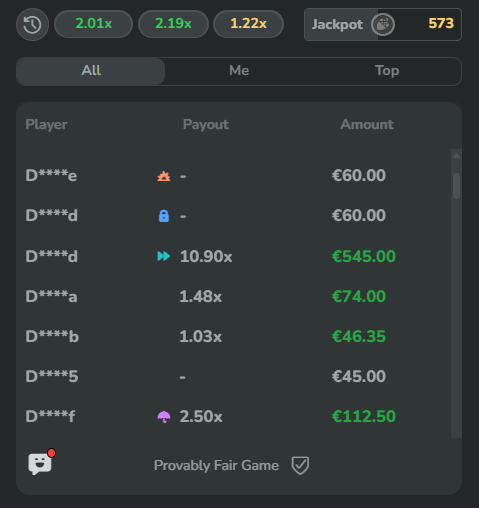
Volatility and Session Swings
Pig-a-Boom can feel smooth or brutal depending on your targets and streaks. Low targets reduce bust frequency but cap excitement, while high targets create dramatic peaks and valleys.
Volatility is not just about the game, it is about how you play it.
| Style | Typical Target | Tradeoff |
|---|---|---|
| Conservative | Low multipliers | Fewer busts, smaller wins |
| Balanced | Mid multipliers | More swings, better upside |
| Aggressive | High multipliers | Big hits, frequent busts |
Bonus Buy Overview and What It Changes
Bonus buys in Pig-a-Boom act like pre-round modifiers rather than classic slot bonus rounds. You are paying for a different risk profile or pace.
Think of them as modes that change how the round feels, then test them in demo before using real money.
Lock Bonus Buy Explained
Lock is positioned as a control feature that helps secure winnings while continuing to play the round. It is aimed at players who want a more structured feel.
The key is to treat it as planned stability, not as a rescue after a loss streak.
- Use with fixed bet sizes
- Plan a set number of rounds
- Stop if tilt begins
- Compare results to baseline play
Insurance Bonus Buy Explained
Insurance is designed to soften the pain of early crashes. It can make the game feel less punishing, especially for cautious players.
Insurance usually reduces the feeling of pure upside, so judge it by session stability, not by chasing the biggest multiplier.
- Best for low risk sessions
- Good for learning timing habits
- Not ideal for huge multiplier hunting
- Pair with strict stop loss rules
Wild Bonus Buy Explained
Wild is framed as a pace and intensity booster that pushes the action faster. That can be fun, but it also increases pressure on your timing decisions.
Use it when you want adrenaline, not when you want to rebuild a bankroll.
- Expect faster decisions
- Use smaller stakes than usual
- Limit the number of rounds
- Do not stack with chasing behavior
Boom Bonus Buy Explained
Boom is positioned as an automation style option tied to the crash multiplier moment. It appeals to players who want a more hands off rhythm.
Automation can encourage overplaying, so pair it with time and round limits.
- Decide your session budget
- Decide a maximum round count
- Start with a small stake
- Stop at your preset limit
Bonus Buy Comparison Table
Use this quick comparison to pick a bonus buy mode that matches your mood and bankroll.
| Bonus Buy | Best For | Main Tradeoff |
|---|---|---|
| Lock | Structured control | Cost for stability |
| Insurance | Reduced early bust pain | Less raw upside feel |
| Wild | Fast, spicy sessions | More pressure and swings |
| Boom | Hands off rhythm | Easy to overplay |
Coin Collection and Progression Loop
Coin collection adds a meta layer that makes sessions feel connected instead of isolated. It is one of the reasons Pig-a-Boom feels more like a modern casino product than a simple crash chart.
Progression systems can be motivating, but they can also tempt you to extend sessions beyond your plan.
- Track progress without extending sessions
- Keep stakes consistent during grinds
- Use demo for feature discovery
- Do not chase progress after losses
Mystery Drops and Surprise Moments
Mystery drops are designed to break monotony and create unexpected highlights. They can make even a normal session feel eventful.
In reviews, describe them as engagement features, not as reliable income streams.
Hero Jackpots and Social Highlights
Hero moments and jackpot style highlights add social tension to cashouts. The game rewards timely cashouts with a sense of spotlight, which encourages confident decisions.
This is where Pig-a-Boom borrows heavily from slot psychology while keeping crash mechanics.
Feature Layer Summary Table
This table separates core crash play from the extra layers that add variety.
| Layer | What It Adds | Player Impact |
|---|---|---|
| Core Crash | Multiplier and cashout timing | Fast decisions and risk control |
| Progression | Coins and collection loop | Longer term engagement |
| Events | Mystery drops and hero moments | Spikes of excitement |
Provably Fair and Trust Basics
Provably fair messaging is meant to show that results can be verified after the round. It is a transparency layer that matters most to players who worry about manipulation.
If your casino provides a verifier screen, use it to understand the concept, then return to gameplay with realistic expectations.
- Look for provably fair section
- Check round identifiers shown
- Use the built in verifier
- Verify a few sample rounds
- Do not confuse fairness with profit
Demo Mode and Learning Path
Demo mode is the best place to learn pacing, UI timing, and bonus buy behavior without pressure. It helps you build a repeatable process before money is involved.
Use demo to test one variable at a time so you actually learn what changes your results.
- Play baseline rounds first
- Pick one cashout style
- Test one bonus buy mode
- Compare feel and swings
- Set real money rules after
Mobile Play and Interface Reality
Pig-a-Boom is built for quick sessions, so mobile usability matters. Your cashout timing is only as good as your screen clarity and tap accuracy.
Before playing for money, confirm you can read the multiplier and hit cashout confidently on your device.
Mobile Checklist for Fewer Mistakes
Use this checklist to reduce misclicks and lag problems that can ruin crash games.
- Play on stable Wi-Fi first
- Disable battery saver throttling
- Close background heavy apps
- Increase screen brightness
- Use one hand cashout practice
- Avoid playing during poor signal
Bankroll Rules That Actually Help
Crash games feel skill adjacent, which can trick you into chasing. Bankroll rules are the difference between fun sessions and chaotic ones.
Set limits before you start, then treat those limits as non negotiable.
| Rule | Simple Setting | Why It Works |
|---|---|---|
| Budget | Fixed session amount | Prevents endless chasing |
| Stop Loss | Hard cutoff point | Limits damage from streaks |
| Stop Win | Lock profit and leave | Prevents giving it back |
Common Mistakes and How To Avoid Them
Most losses come from behavior, not from misunderstanding mechanics. Pig-a-Boom punishes emotional decisions because rounds are fast and tempting.
Avoid the usual traps and your experience improves immediately.
- Chasing losses with bigger bets
- Changing targets every round
- Playing without a round limit
- Using bonus buys as recovery
- Ignoring tilt and fatigue
Pros and Cons in One Block
This is the quick summary you can paste into a review box. Keep it honest and aligned with the crash format.
| Pros | Cons | Best For |
|---|---|---|
| Fast, simple core loop | Not a true slot experience | Timing focused players |
| Bonus buy variety | Easy to overplay | Short, planned sessions |
| Slot-like excitement layers | High swings when aggressive | People who like tension |
Final Takeaway and Who It Suits
Pig-a-Boom is a crash game dressed in modern casino UX, with bonus buys and progression that give it slot-like flavor. It works best when you approach it with rules, not vibes.
Try it in demo, choose one cashout style, then add bonus buy modes only after you understand your own session behavior.
One line: A fast crash game with extra features that feel slot-adjacent, built for disciplined timing.
FAQ
Is Pig-a-Boom a Slot?
No, it is a crash multiplier game, even if it is often searched as a slot.
How Does Pig-a-Boom Work?
You place a bet, the multiplier rises, and you cash out before the crash ends the round.
What Does RTP 97% Mean?
It is a long run statistical average, not a guarantee for any single session.
What Does Up to x10,000 Mean?
It is the maximum advertised ceiling, and the biggest multipliers are rare.
Is There Any Real Strategy?
The only reliable edge is bankroll control and consistent cashout rules, not chasing.
What Is A Bonus Buy Here?
It is a pre-round modifier that changes how the round behaves, not a reels bonus round.
What Does Lock Bonus Do?
It is designed to add structure by locking winnings while continuing the round.
What Does Insurance Bonus Do?
It aims to reduce early crash pain with a safety oriented modifier.
What Does Wild Bonus Do?
It increases pace and intensity, which can feel more volatile in short sessions.
What Does Boom Bonus Do?
It is positioned as an automation style option tied to the crash multiplier moment.
Can I Play Pig-a-Boom for Free?
Many casinos offer demo mode, and it is the best way to learn timing safely.
Is Pig-a-Boom Good on Mobile?
Yes if your device has clear UI and stable connection, because timing is everything.
What Are Mystery Drops?
They are surprise events meant to add excitement and break the monotony of normal rounds.
What Are Hero Jackpots?
They are highlight moments that add social tension and slot-like excitement to cashouts.